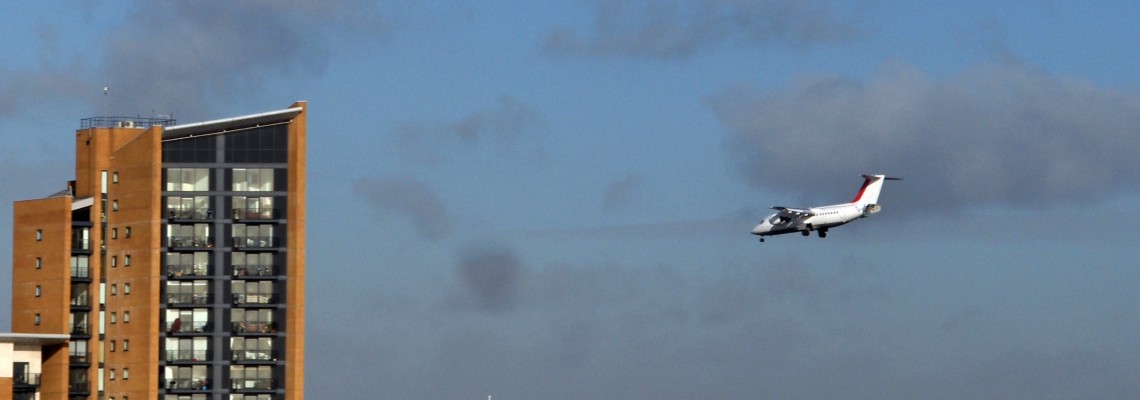
The Royal Docks in Newham, east London, sits along the bank of the river Thames and was historically a gateway between London and its global markets. London City Airport (LCA), constructed in 1986, is located in the heart of the community and principally serves the financial districts of London.
Residents in the Royal Docks expressed concerns over increasing levels of noise, which they perceived were being generated as a result of LCA’s operations. The number of passengers using the airport has risen in consecutive years to 3.3 million in 2008. The increase in airport traffic has impacted the local community who are unhappy about the levels of noise pollution they are being exposed to. Additionally, concerns were raised due to London City Airport’s approved expansion to increase the number of flights by 50%, to 120,000 per year.
Our Role
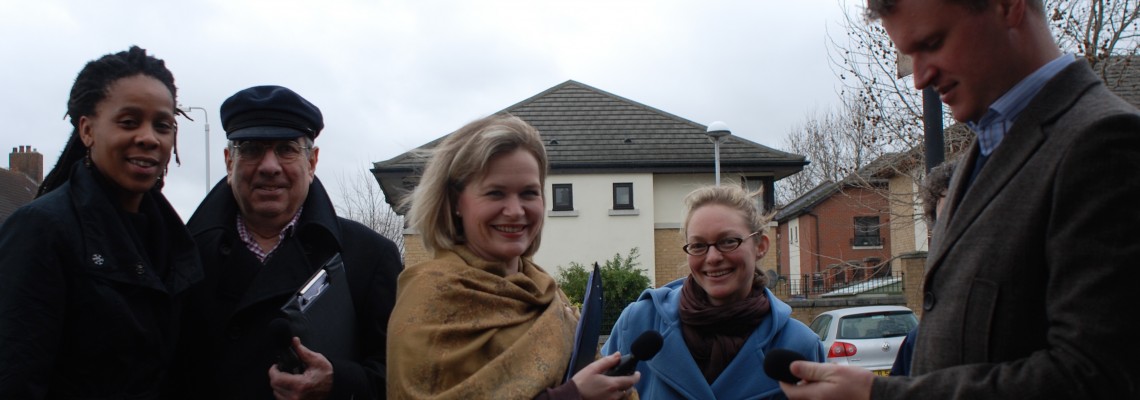
We devised a simple survey method to enable the community to collect their own noise readings. Residents were given affordable noise meters and trained in how to collect the data. Over a period of seven weeks local residents conducted a comprehensive noise mapping survey during which readings were taken at all hours of the day and night, across the areas surrounding the airport.
Impact
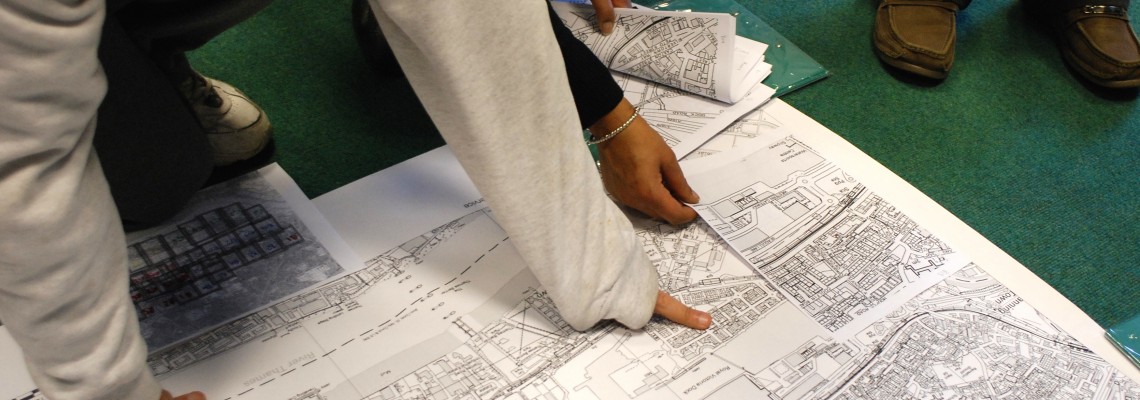
Over 500 individual readings were taken across the site. In addition to recording decibel (dBA) levels, residents also provided subjective annotations that expressed how they felt about the noise. They were asked to choose from a selection of words such as relaxing, annoying, or disturbing to describe the sound source. Using a Geographical Information System the data was compiled and visualised in a local Noise Map.
Residents found disturbingly high levels of noise, with many readings exceeding levels deemed to cause serious annoyance under the World Health Organisation community noise guidelines. The vast majority of readings taken were described as Loud, Very Loud or Extremely Loud. In addition, the measurements gathered by the community revealed a clear correlation between unacceptable levels of noise and the LCA operating hours.
The results also revealed that individuals are quite accurate in their perception of noise levels, suggesting that perhaps people are very reliable noise monitors!
Using our online Community Map platform, further monitoring was undertaken by a wider community, including residents from neighbouring boroughs, during the Icelandic volcanic eruption.
This provided residents with the rare opportunity to compare noise levels during normal flight operations to a no-flight period. Noise levels rose to the 60 decibel range on only three occasions during the no-flight period. During normal flight operations highs of 87 decibels were recorded with just under a third of all readings exceeding 60 decibels.
Fight the Flights – a local campaign group, some of whose members participated in the monitoring, went on to submit a legal challenge against Newham council’s decision to approve the expansion.


