
The Pepys Estate in Deptford, south London, is a predominately 1960’s housing estate on the banks of the Thames, characterised by tower blocks and social housing. Situated near a busy thoroughfare and surrounding an industrial site, the estate suffers a variety of urban environmental issues.
Residents in the Pepys Estate expressed concerns over local air quality, and wanted to assess how good or poor the air quality was. They had particular concerns over the mechanical break-up of vehicles, and large goods vehicles servicing the scrap yard and local traffic, which were seen as potential sources of pollution. The possible impact of a planned housing development further heightened their desire to assess local air quality. The survey was initiated with the Pepys Community Forum and commissioned by London Sustainability Exchange (LsX), a charity geared to creating a more sustainable London.
Our role
After a meeting in the local community centre, Mapping for Change provided residents with instructions and survey equipment to carry out their investigations.
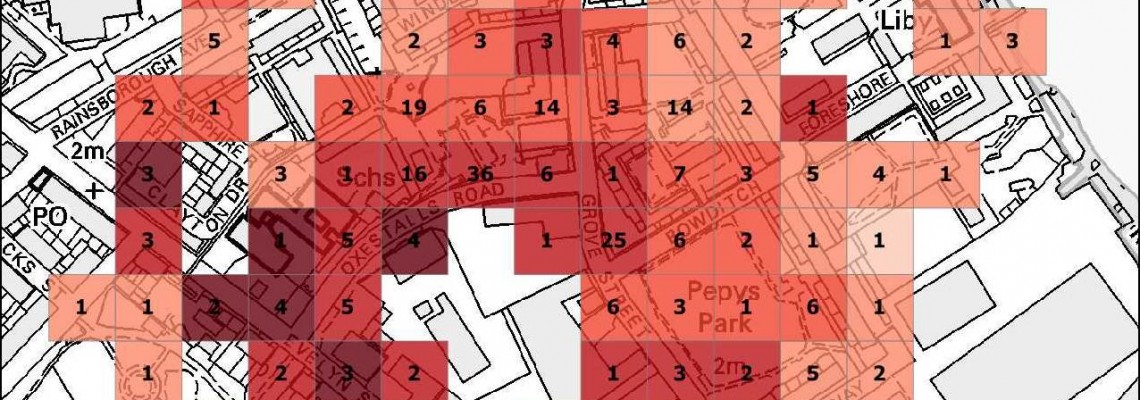
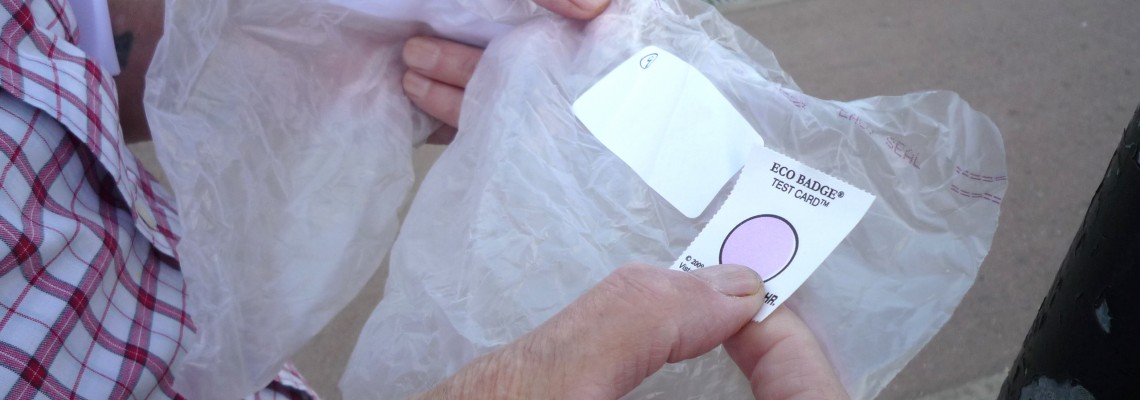
The area was divided up into 100m grids to obtain a good distribution of samples taken. Activities commenced with a series of diffusion tubes being set out on lampposts around the area. Wipe samples were taken to assess the quantity and type of metals being deposited on vertical surfaces. Ozone levels were measured using Eco-badge™ ozone detection kits, and leaf samples were collected and analysed by Lancashire University. All of the data collected was analysed and compiled into a series of maps. A public meeting was held to provide feedback on the findings.
Impact
As a result of the air quality mapping survey, the Local Authority have installed diffusion tubes at the main junctions identified by the project as having higher levels of NO2. They are also installing PM10 monitoring stations to get a more accurate picture of PM10 levels in the area.
Previously, the closest fixed monitoring station was just over a kilometre away. With the installation of the new air quality monitoring devices the community have been able to obtain data relative to conditions on the estate over a longer period of time.


